
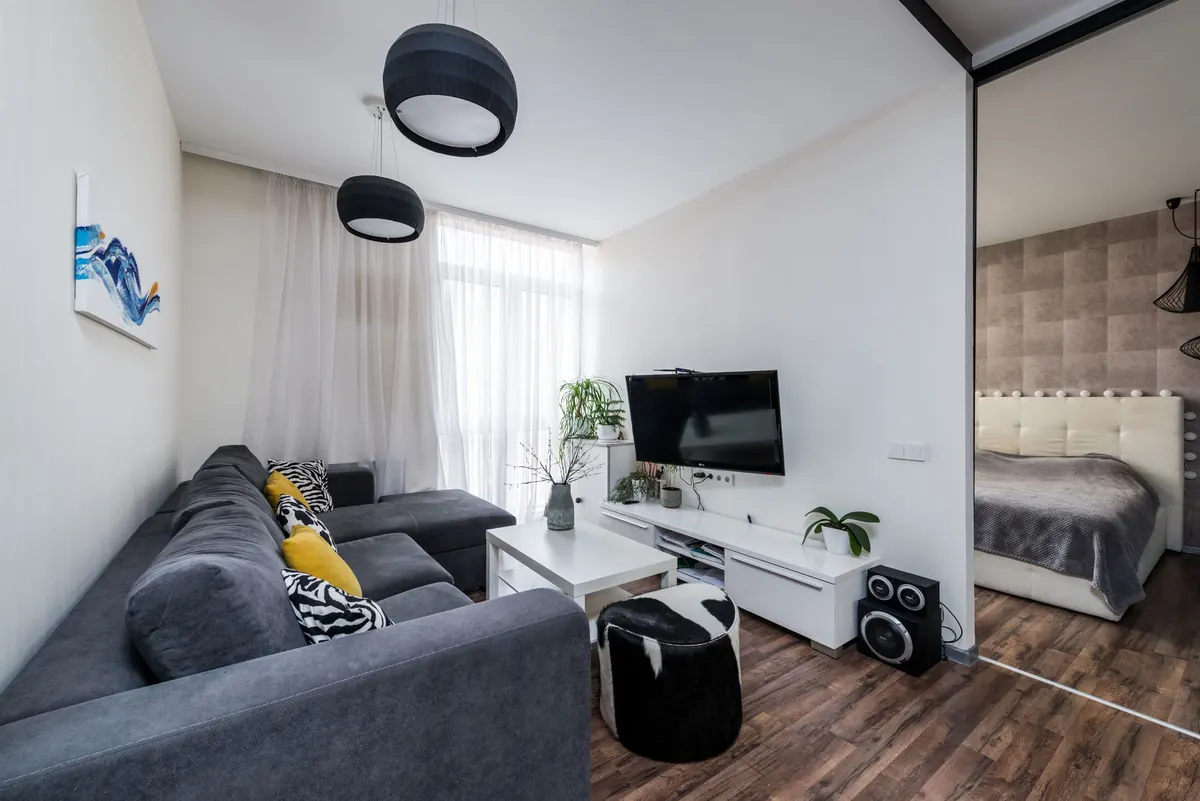


Pendant vs. Chandelier vs. Flush Mount: A Lighting Comparison for Every Ceiling Height
Most ceiling lights are chosen for how they look in a photo, then lived with for a decade. The honest starting point is a tape measure: the distance from floor to ceiling rules out half your options before style gets a vote. A pendant that looks graceful in a 10-foot dining room can turn an 8-foot bedroom into a place where you duck.
Here is how flush mounts, pendants, and chandeliers behave at different heights, what each one is genuinely good at, and how to pick without guesswork.
Start With Measurements and Clearance
Measure floor to ceiling in the exact spot the fixture will hang. Not the number on the plan — the real one, especially under a soffit, a beam, or dropped ductwork.
Then hold every candidate fixture to three distances:
- Walking zones — hallways, the space around a bed, the main path through a living room: the lowest point should sit at least 7 feet above the floor. Codes vary by area, but 7 feet is where tall guests stop noticing the light.
- Dining tables — 30 to 36 inches between the tabletop and the bottom of the fixture. Lower feels intimate and lights the food; higher leaves the table in shadow.
- Kitchen islands and counters — the same 30 to 36 inches. With bar stools, aim for the higher end so nobody's forehead meets a shade.
One rule of thumb worth keeping: add the room's length and width in feet and treat the total as the fixture's diameter in inches. It is a starting point, not a law.
Flush Mount: The Quiet, Practical Answer
A flush mount sits within an inch or two of the ceiling. There is nowhere for it to hang, which makes it the safest choice for 8-foot ceilings and anything lower — bedrooms, hallways, closets, bathrooms, basements, laundry rooms.
The trade-off is personality. Flush mounts light a room evenly and forgettably, and most push light down and out rather than up. A wide shade or a diffuser softens the glare; a bare bulb version looks utilitarian, which is fine in a closet and less fine in a guest room.
Semi-flush: the middle ground
A semi-flush mount drops 4 to 8 inches from the ceiling. On an 8-foot ceiling it adds shape without stealing headroom, and it reads as more deliberate than a flush mount in an entry or a small bedroom. Run the math first: a 10-inch drop on an 8-foot ceiling leaves about 7 feet of clearance, workable in a room nobody walks under it.
Pendant Lights: Precision Over Presence
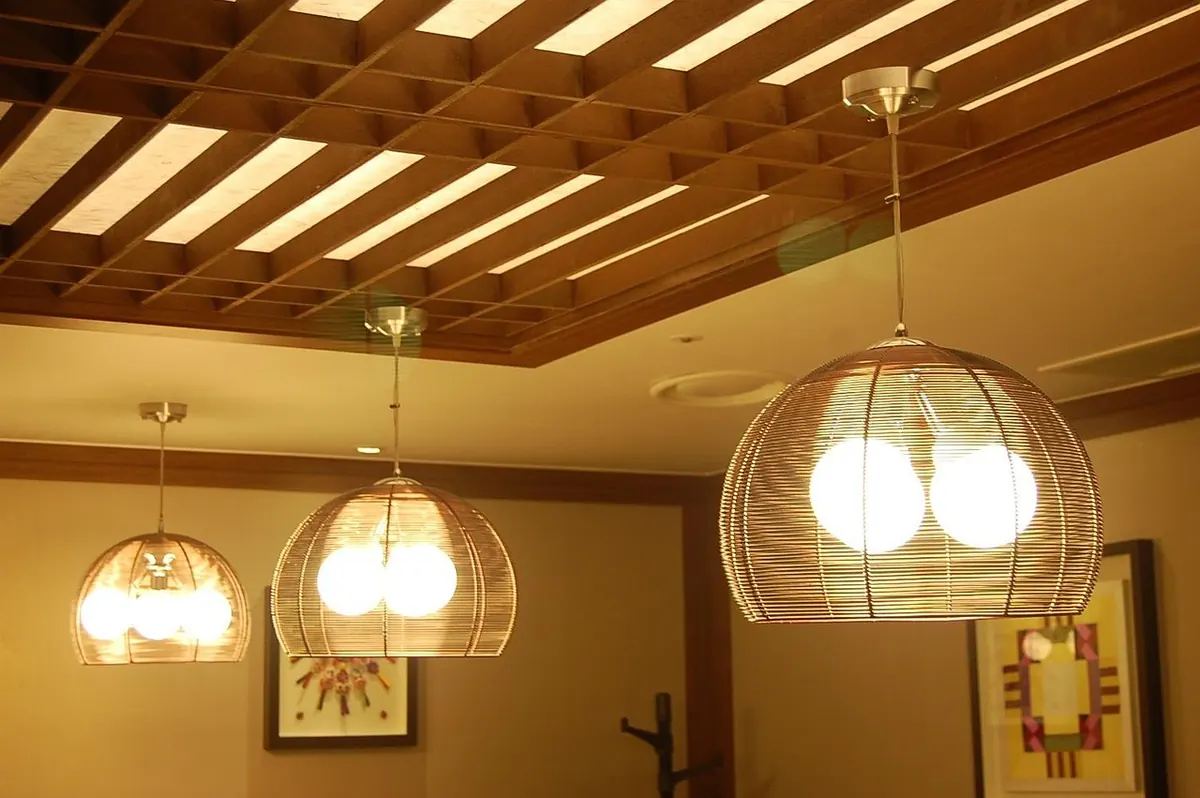
Pendants hang from a cord or rod and put light exactly where you need it: over an island, beside a bed, above a sink, in a reading corner. Think of them as task lighting wearing a decorative costume.
Ceiling height matters here. Nine feet handles most pendants comfortably. Eight feet works only when the pendant is short and hangs over something nobody walks under — a nightstand or a narrow counter. At 10 feet and up, check the cord length before buying; many pendants ship with a cord that will not reach, and you may need a longer cord or a downrod from the manufacturer.
A few details separate a good pendant installation from a crowded one:
- Space them 24 to 30 inches apart, center to center, and keep the outer fixtures 12 to 18 inches in from the island's edge.
- Three small pendants over a wide island usually look calmer than two, which leave a dead center gap.
- For tall ceilings and stairwells, cluster two or three pendants at different heights instead of one long drop.
- Use the same bulb in every pendant. Mismatched color temperatures are the most visible mistake in an otherwise good kitchen.
Chandeliers: Scale Does the Work
A chandelier is a pendant with a silhouette — multiple arms, tiers, crystals, or a large drum. It earns its place where the ceiling can hold it and the room has a center: foyers, dining rooms, stairwells, and bedrooms in older houses.
Height changes everything. On an 8-foot ceiling, keep the chandelier compact — under about 20 inches tall with a minimal chain, or choose a semi-flush style that hugs the ceiling. On 9-foot ceilings, most standard chandeliers work above a dining table. In a two-story foyer you have room for chain and drama; hang it low enough to feel connected to the entry, high enough that nobody looks straight into a bulb on the way in.
Then check the ceiling itself. Chandeliers are heavier than they look, and the electrical box has to be rated for the weight. A brace or a new box is a job for a licensed electrician, not a drywall anchor.
Matching the Fixture to the Room
- Bedroom, 8-foot ceiling: flush or semi-flush, centered.
- Bedroom, 10-foot ceiling: small chandelier, or sconces and a ceiling fan instead.
- Dining room, 8 feet: semi-flush or a low-profile chandelier.
- Dining room, 9 feet and up: chandelier, 30 to 36 inches above the table.
- Kitchen island: two or three pendants, or one linear pendant for a long counter.
- Hallway or landing: a row of matching flush mounts, evenly spaced.
- Two-story foyer: chandelier on a chain, or a cluster of pendants.
- Bathroom or covered porch: flush mount rated for damp or wet locations.
Where the Light Actually Goes
Direction matters as much as shape. Flush mounts throw light down and out, which is why they can leave a ceiling feeling dim. Pendants concentrate light on one surface and leave the rest of the room to lamps. Chandeliers with exposed bulbs scatter light in every direction, including up, which flatters a ceiling and softens a room.
Two practical upgrades: put every ceiling fixture on a dimmer, and keep color temperature consistent within a room. Warm light, around 2700K, suits bedrooms and living rooms; cooler light near 3000K suits kitchens and bathrooms. Mixing them in one sightline makes even expensive fixtures look mismatched.
How to Decide Without Regret
Measure the ceiling. Apply the clearance numbers. Name the job the fixture has to do — even ambient light, focused task light, or a focal point. Then check the weight and the box before you buy.
If you can, cut a cardboard template to the fixture's diameter and tape it to the ceiling, or hang a paper mock-up at the height you plan to install. Live with it for an evening. It takes ten minutes and saves the return shipping on a fixture that was wrong by four inches. Anything beyond swapping a fixture on an existing, properly rated box — new wiring, a heavier chandelier, a second switch — is work for a licensed electrician.
Photo: siooh / Pixabay